Why Is Emotion So Important For Brands? Memory Isn’t Just About The Past, We Use It To Plan Our Future.
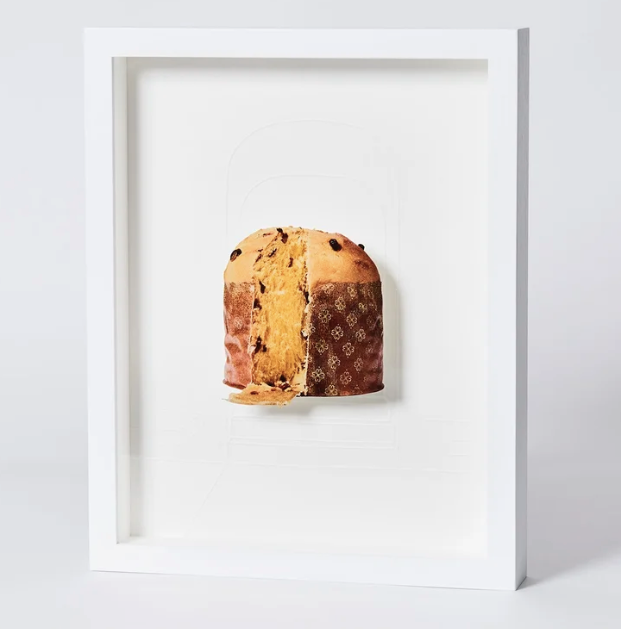
Memory Box Series - By Kirsten Bresciani
I’ve always loved panettone - especially at Christmas. I just think of the soft fluffy texture, the taste dunked in coffee, the sweetness. It makes me feel secure, family, happy, warm and nostalgic all at the same time. There is a lot of emotion packed into every bite.
Lets talk about emotion and why they matter for brands.
A lot of attention in advertising has recently been paid to the importance of emotion as a key driver of brand advertising effectiveness. Recent high-profile studies by System 1, Binet and Field and others all support the primacy of emotions in communication. Even Mark Riston is on board.
The three new mandates for effective communication that emerge from all this are:
(1) Brand codes (the trendy term of distinctive assets)
(2) Consistency - longevity, repetition over time, and
(3) Emotion – the ability to drive emotive connection.
Of all these arguably emotion is the most important.
But why? What is it about emotion that so important to effectiveness?
The answer is surprising.
Not only is emotional content more likely to get our attention and more likely to be remembered in the first place, but new thinking about the role of human memory suggests a deeper explanation.
Increasingly scientists are arriving at the conclusion that memory exists to help us predict the future rather than to recall the past.
Of course, memory allows us to reflect, experience nostalgia, to find things we have lost, to recognise familiar people, places and things. But a new theory of memory suggests its real function is to play a vital role in informing our day-to-day decisions.
In other words, our memory is above all else a human decision-making tool.
David Robson in an article in New Scientist puts it this way: “Human memory didn’t evolve so that we could remember, but to allow us to imagine what might be. This idea began with the work of Endel Tulving, now at the Rotman Research Institute in Toronto, Canada, who discovered a person with amnesia who could remember facts but not episodic memories relating to past events in his life.
Crucially, whenever Tulving asked him about his plans for that evening, the next day or the summer, his mind went blank – leading Tulving to suspect that foresight was the flipside of episodic memory.”
When we are faced with a situation that requires a decision and have certain options available, memories are recalled that prompt emotions. In this way we attach emotional states to potential future outcomes that are highly influential in deciding our course of action.
The more powerful the emotion, the more influential the memory and its ability to affect our behaviour. The implications for marketing and communication are crucial. The emotions that are created and communicated in advertising are not just a tool to remember a brand, these emotions that are stored in memory are primed to actively influence our future decision-making.
There is a lot more happening here that just mental availability – which drastically oversimplifies the behaviour change task for brands.
So, when I start to think about what type of running shoes, I might want to buy I don’t just rationally remember the Nike brand and its products.
As part of my decision making I start to actively re-experience the memories I associate with the brand via its communication – memories that include powerful and highly desirable emotions associated with human achievement and success.
My brain is using memory to try to imagine a future state (and definitely in this instance overstating my own ability to achieve in said shoes) in order to guide my decision-making.
The fact that this process is emotional and can bypass rational considerations makes it more, not less, powerful. When was the last time you saw a reason to believe in a Nike TV commercial?
Such emotions are not just encoded via advertising – they are created by all experiences with a brand – both positive and negative in stores, service interactions, events and online journeys. Perhaps the advertising context is the easiest to control.
The intensity of the stored emotions, how they make people feel when recalled, and how aligned they are to the specific decision being made are all relevant factors.
Trump, for example, has a lot of mental availability, how memories about him influence one’s behaviour depend is a whole separate question. There is much more happening here than 'mental availability'.
Thinking in terms of ‘mental availability” almost makes the brand builders task seem binary, mechanistic and lacking nuance. Just be in as many heads as possible.
We should be thinking instead if richer and deeper psychological meaning. It’s the strength, nature and quality of the ‘mental associations’ that count.
The role of memory as a decision-making tool helps to explain exactly why emotion and distinctiveness are so crucial for brands. It is both a reminder of the need to fight for these aspects of brand strategy and execution, as well as a way to argue more persuasively for their employment.
All this writing is making me rather hungry…I’m off to the kitchen for for a slice of my favourite Christmas indulgence and a coffee.